
Rowing Machine vs Exercise Bike: Which One Will You Actually Use?

Rowing machine vs exercise bike comes down to comfort versus variety. A bike is the easier, more comfortable seat, and a rower asks more of you and rewards it with a full-body workout. This guide compares them for home use on the factors that decide a purchase, then points to two budget-friendly rowers for people who choose rowing. It is based on general exercise guidance and product listings, not hands-on testing.
Quick comparison
- 1From about $190Check price
- 2
Sunny Smart Magnetic Rower
Sunny Health & Fitness Magnetic Rowing MachineMagnetic, adjustable levels · Basic LCD monitor · Compact design
From about $199Check price
Links go to Amazon. Prices shown are the last ones we checked and change often.
Quick verdict
Choose an exercise bike if you want a comfortable, simple, seated workout that you can sustain for a long time and that suits almost anyone in the house. Choose a rowing machine if you want your back, shoulders and arms involved, you find bikes dull and you can handle a little technique. If you are leaning toward a rower, start with a quiet magnetic model and read our best magnetic rowing machines guide.

Side by side
| Rowing machine | Exercise bike | |
|---|---|---|
| Muscles used | Legs, back, core and arms | Mostly legs |
| Impact | Low | Low |
| Learning curve | A few sessions | None |
| Seat | Narrow, can get sore | Built for long sits |
| Noise | Magnetic and water quiet, air louder | Quiet |
| Space | Long, but many fold or stand | Compact |
| Boredom | Moderate, apps help | Moderate to high |
Muscles and what you feel
A bike is a leg workout with a very light touch on the arms and back. That is great for leg endurance and easy on balance.
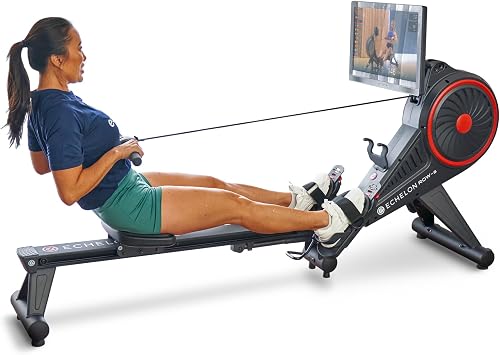
A rower splits effort across legs, back and arms in a repeating sequence. The legs drive, the hips swing and the arms finish. Because more muscle is involved per stroke, many people feel it across the whole body after a session. Our rowing machine form guide explains the stroke and how to avoid common mistakes.

Comfort and joints
Both are low impact, which is why they appeal to people avoiding running. A bike's seated, steady motion is the easier option for many people with hip or knee pain. A rower bends the knees deeply at the catch and puts load through the back, so form matters more.
Seat comfort is the common complaint on rowers. The Concept2 seat in particular is narrow and hard. A cushion helps, and our rower seat cushion guide covers options. If you have an injury or chronic pain, check with a clinician before you buy either machine.
Space and noise
An upright bike has a small footprint. A rower is long when in use but often folds, splits in two or stands on end. Our best rowing machines for small spaces page lists the compact options.
For noise, magnetic rowers and bikes are both quiet, and a magnetic rower will not wake a sleeping household. Air rowers are louder. If noise matters most, see our best quiet rowing machines guide.

Boredom and habit
Bike workouts suit watching a show or taking a class, and the lack of technique makes it easy to zone out. Rowing asks for attention to stroke rate and form, which some people find more engaging and others find tiring. If you have quit bikes before because they felt dull, a rower can offer a different rhythm and a different set of numbers to chase.
Calories, results and expectations
People often ask which machine burns more, and the honest answer is that it depends on how hard and how long you go. A hard rowing interval session and a hard bike interval session can both be tough. Rowing recruits more muscle, which can raise the effort, but a bike lets many people ride longer because the seat is comfortable and the motion is simple.
For fat loss, the plan matters more than the machine: sessions you can repeat, steady eating habits and enough sleep. For fitness, mix easy long sessions with a few harder intervals. On a bike that might be a spin class. On a rower it might be a set of one-minute efforts with rests. Our best rowing machines for weight loss page has routines and machines for that goal.
Mistakes people make with each
On a bike the usual mistakes are a seat that is too low, which strains the knees, and resistance so light that the session does little. On a rower the common ones are rounding the back, pulling with the arms first and setting the resistance too high before the stroke is smooth. Spend the first week at an easy level, learn the sequence and build up.
Can you own both
You can, and plenty of people do. A bike gives you comfortable, steady cardio on easy days. A rower gives you a full-body session when you want more. If you have room for only one, pick the one that fits your joints and your space, and revisit the other later when you know your habits.
Our rower picks
Q1S Magnetic Rower
Q1S Magnetic Rowing Machine with Dual Slide Rail
A low-cost, quiet magnetic rower with a dual slide rail and a very large owner base on Amazon. A cheap way to find out if you prefer rowing to cycling.
- Resistance
- Magnetic
- Rail
- Dual slide rail
- Monitor
- LCD
What works
- Best seller at a low price
- Quiet and smooth for the money
- Thousands of owner ratings
Watch for
- Entry-level materials
- Monitor is basic
Best for: a budget rower with thousands of buyer reviews
Q1S Magnetic Rower: the cheap trial
The listing shows a dual slide rail, quiet magnetic resistance and a very large number of ratings on Amazon. It is a low-risk way to see whether you like rowing. It is not a machine for years of very hard training.
Sunny Smart Magnetic Rower
Sunny Health & Fitness Magnetic Rowing Machine
A longer rail, adjustable resistance and a free app at a low price, with tens of thousands of ratings. A solid choice if you are swapping a bike for a rower.
- Resistance
- Magnetic, adjustable levels
- Monitor
- Basic LCD monitor
- Storage
- Compact design
What works
- Quiet magnetic resistance
- Low cost of entry
- Easy to set up
Watch for
- Entry-level monitor and build
- Not made for hard daily training
Best for: quiet, low-cost home workouts
Sunny Smart Magnetic Rower: the safe step up
It has a longer rail, adjustable magnetic resistance and a free app, with tens of thousands of ratings. If you want something a little sturdier than the cheapest option and still affordable, this is the sensible pick. Our Sunny rowing machine review compares the models.
Who should pick which
Pick the bike if you want comfort, simplicity and a workout anyone in the family can start in a minute.
Pick the rower if you want your back and arms working, you get bored on bikes or you want a low-impact option with more variety.
Pick neither yet if you are not sure you will keep it up. Try a cheap magnetic rower first, or borrow time on a gym machine.
Before you click buy
Measure the spot, check the weight limit against your own and read the return policy, since both machines are heavy and shipping them back is a chore. Look at recent reviews rather than only the average, and check what the warranty covers on moving parts.
Bottom line
A bike is the comfortable, easy answer, and a rower is the fuller, more demanding one. If you want the easy habit, buy the bike. If you want your whole body involved and a bit more variety, a quiet magnetic rower is the better change of pace. Either way, the machine you use is the right one.
Frequently asked questions
Is a rowing machine better than an exercise bike?
It depends on what you want. A rower works your legs, back and arms together, and a bike mostly works the legs with a seated, comfortable position. Pick the one you will use regularly, and consider joints and space.
Which burns more calories, a rower or a bike?
It depends on effort, duration and body weight. Both can burn plenty when you work hard. Rowing uses more muscle per stroke, but most people can sustain a bike session for longer. Consistency decides results.
Is a rower or a bike better for bad knees?
Both are low impact. A bike is easier for many people with knee pain because the motion is simple and seated. A rower bends the knee deeply at the catch. Ask a clinician first and see our guide for sore knees.
Is rowing harder than cycling?
It is more technical. A bike needs no skill, and a rower has a stroke sequence. Most people get comfortable within a few sessions. A rower also uses more total muscle, so it can feel more demanding at the same time.
Which is more comfortable to sit on?
A bike seat is built for long sits, and a rower seat is narrow, especially on air rowers. Many people add a seat cushion on a rower. Our seat cushion guide covers fixes for a sore tailbone.
Which takes up less space?
An upright bike is compact, while a rower is long in use. Many rowers fold, split or stand on end, which narrows the gap. Measure the room and check each listing's dimensions and storage options.
Which is quieter, a rower or a bike?
Magnetic rowers and magnetic bikes are both quiet. Air rowers are noisier because of the fan. A magnetic rower is a fair match for an apartment, and our quiet rowing machine guide compares them.
Can I lose weight with a rower or a bike?
Either can help as part of a routine with a sensible calorie balance. The best choice is the one you will do for 30 minutes most days. Rowers add upper body work, and bikes are easier to sustain.
Does a rower work the upper body more than a bike?
Yes. A bike barely uses your arms and back, while the rowing stroke has a pull that engages the back, shoulders and arms. If you want upper body involved in your cardio, a rower is the better choice.
Should I buy a rower or a bike for a home gym?
If you want one cardio machine that adds variety, a rower is a good pick for a small gym. If you want something anyone in the house can hop on without instruction, a bike is simpler. Consider who will use it.
Keep reading
Workouts and Goals Rowing Machine vs Treadmill: Which Should You Buy? Rowing machine vs treadmill compared on muscles worked, joint impact, noise, space, cost and who should buy each, with rower picks if the rower wins. 7 min read · Updated Nov 24, 2026 Workouts and Goals Rowing Machine or Elliptical for Weight Loss: Which Wins? Rowing machine or elliptical for weight loss? Compare effort, joint load, noise, space and how likely you are to keep using each, plus the rowers to buy. 11 min read · Updated Nov 24, 2026 Types and Brands Best Magnetic Rowing Machines (Quiet, Affordable, Low Maintenance) Best magnetic rowing machine picks: six rowers compared on noise, stroke feel, rail length and price, and how magnetic differs from air and water. 7 min read · Updated Oct 27, 2026