
Rowing Machine vs Treadmill: Which One Fits Your Home and Your Goals

Rowing machine vs treadmill is a decision about how you like to move and where you live, not about which machine is magic. A treadmill is the familiar one: you walk or run, and almost nothing needs learning. A rowing machine asks for a stroke, a bit of technique and a little more floor space, and gives you a low-impact workout that uses your legs, back and arms together. This guide compares them on the things that actually decide a purchase and points to rowers if the rower wins for you. It is based on general exercise guidance and product listings, not hands-on testing.
Quick comparison
- 1
Sunny Smart Magnetic Rower
Sunny Health & Fitness Magnetic Rowing MachineMagnetic, adjustable levels · Basic LCD monitor · Compact design
From about $199Check price - 2From about $990Check price
Links go to Amazon. Prices shown are the last ones we checked and change often.
Quick verdict
Buy a treadmill if you already like walking or running, want the least learning curve and have room for a wide, heavy machine. Buy a rowing machine if you want less joint impact, a full-body session and a machine that can fold or stand on end. If you are short on space or have knee or hip trouble, the rower is usually the better fit.
If you are unsure which cardio machine suits weight loss, our rowing machine vs elliptical weight loss guide covers a third option.

Head to head
| Rowing machine | Treadmill | |
|---|---|---|
| Muscles used | Legs, back, core and arms | Mostly legs and core |
| Joint impact | Low | Higher, especially when running |
| Learning curve | A few sessions to learn the stroke | None |
| Noise | Magnetic and water are quiet, air is louder | Footfall and motor hum |
| Space | Long, but many fold or stand up | Wide, heavy, often does not fold small |
| Cost | Good options at low and mid prices | Decent models usually cost more |
| Boredom risk | Moderate, music and apps help | Moderate to high |
What each machine works
A treadmill works the lower body and trunk, and your arms mostly swing. That is fine for walking and running fitness.
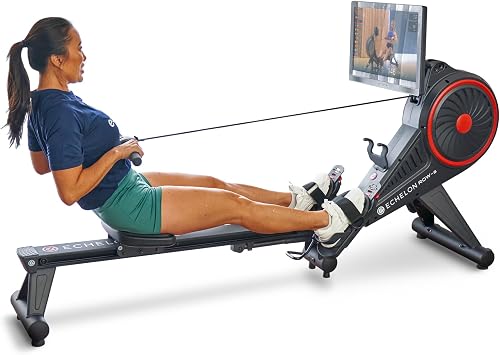
A rower splits the work across the legs, the back and the arms. The drive starts with the legs, swings through the hips and finishes with the arms, so more muscle takes part in each stroke. Our best rowing machines for weight loss page explains how that adds up in a session.
That does not make rowing automatically better. If your goal is to run a 10K, the treadmill trains running better. If your goal is general fitness with less impact, the rower fits well.

Joints and comfort
Running sends an impact through knees, hips and ankles with every step, and treadmill decks cushion some of that. Walking on a treadmill is gentle. Rowing keeps your feet on the footplates and slides your weight smoothly, which is why it is popular with people who want low-impact cardio.
The usual caution is technique. Rowing with a rounded back or yanking at the finish can strain the lower back. Our rowing machine form guide shows the position to aim for. If you have an injury or chronic pain, check with a clinician before choosing either machine.
Space and noise
Treadmills are wide and heavy, and many do not fold small. A rower is long in use, but several fold, split in two or stand on end. Our best rowing machines for small spaces guide compares them.
Noise differs by type. Magnetic and water rowers are quiet. Air rowers are louder because of the fan. A treadmill adds impact noise and a motor, which neighbours below may hear.
Cost and ownership
You can buy a decent rower for less than a decent treadmill, and rowers have no motor to burn out. Treadmills have belts, motors and decks, which are the parts that wear. Compare current prices and delivery fees on Amazon for the exact models, because both are heavy items.
How the workouts feel different
A treadmill session is steady and easy to measure: pace, incline and time. You can watch a show, think about work or run intervals without learning anything new. The limit is boredom and the thump of every step.
A rowing session is rhythmic. You are managing stroke rate, resistance and form, which keeps your mind busier but also makes the time pass differently. Many people like intervals on a rower, such as 30 seconds hard and 30 easy, because the machine tracks split times and power. Others find steady rowing for 30 minutes dull and prefer a treadmill with a series on a screen.
Be honest about your temperament. If you need entertainment, a smart rower with classes or a treadmill with a screen both work. If you like numbers and improvement, a rower with a good monitor gives you more to chase.

A simple way to decide
Answer four questions. Do your knees or hips complain when you run? Is floor space tight? Do you want upper body involved? Are you willing to spend a few sessions learning a stroke? Three or more yeses point to a rower. Mostly noes point to a treadmill.
If it is close, think about where it will live. A rower that folds or stands on end can disappear in a closet. A treadmill usually stays out, and a machine you see every day is one you are more likely to use.
Our rower picks if you choose rowing
Sunny Smart Magnetic Rower
Sunny Health & Fitness Magnetic Rowing Machine
A quiet, low-cost way to try rowing, with a long rail, adjustable magnetic resistance and a free app. A sensible pick if you are choosing a rower over a treadmill on a budget.
- Resistance
- Magnetic, adjustable levels
- Monitor
- Basic LCD monitor
- Storage
- Compact design
What works
- Quiet magnetic resistance
- Low cost of entry
- Easy to set up
Watch for
- Entry-level monitor and build
- Not made for hard daily training
Best for: quiet, low-cost home workouts
Sunny Smart Magnetic Rower: the low-cost start
It has tens of thousands of Amazon ratings, a long rail, adjustable magnetic resistance and a free app, and it runs quietly. It is the safe, cheap way to find out if you like rowing. It is not built for years of very hard training.
Concept2 RowErg
Concept2 RowErg
The standard for people who want to train seriously on a rower. It costs more than a basic treadmill pick, but it has the longest record and the most owner reviews of any rower.
- Resistance
- Air, adjustable damper
- Monitor
- PM5 with Bluetooth
- Storage
- Splits into two pieces
What works
- Gym-standard build that lasts for years
- Adjustable damper and an accurate PM5 monitor
- Parts and support are easy to find
Watch for
- Long footprint even when split
- No built-in screen or streaming classes
Best for: serious training and long-term durability
Concept2 RowErg: the one to train on
If you plan to row hard and for years, the RowErg is the machine most gyms use. It costs much more and is louder than a magnetic rower, but its monitor and durability are the reasons owners keep recommending it. Our Concept2 RowErg review has the details.
Who should pick which
Choose the treadmill if you love walking or running, want zero technique and have a spare corner for a big machine.
Choose the rower if your knees dislike running, you want arms and back involved, you live in an apartment or you get bored on a treadmill and want a different movement.
Choose neither if you will not use it. The best machine is the one that gets used on a Tuesday night when you are tired.
If you already run outdoors and only want cross-training, see the best rowing machine for runners.
Bottom line
For most people short on space, with sensitive joints or looking for variety, a rower is the better buy. For runners and walkers who just want to keep doing what they love at home, a treadmill is still the plain, honest choice. Start with the budget and the space, then pick the movement you enjoy.
Frequently asked questions
Is a rowing machine better than a treadmill?
Neither is better for everyone. A rower works more of the body with less impact on joints, and a treadmill is simpler and burns calories at a familiar pace. Pick the one you will actually use three or four times a week.
Which burns more calories, a rower or a treadmill?
It depends on effort, body weight and technique. Both can burn a lot when you work hard. A rower uses legs, back and arms together, but beginners often row at a lower effort than they would run. Consistency matters more than the machine.
Is rowing easier on the knees than running?
Yes, generally. Rowing is low impact because your feet stay on the footplates, while running sends repeated impact through knees and hips. If you have knee trouble, see a clinician first, and check our guide to rowers for bad knees.
Does a rowing machine take up less space than a treadmill?
Usually the footprint is comparable in length, but many rowers fold, split or stand on end, which saves room between sessions. Most treadmills are wider and heavier. Check the listing dimensions of the exact models.
Which is quieter, a rower or a treadmill?
Magnetic and water rowers are quiet. Air rowers are louder, with fan noise. A treadmill adds footfall thumping and a motor hum. Apartment dwellers often find a magnetic rower the quietest of the three.
Can you lose weight on a rowing machine?
Yes, as part of regular exercise and a calorie balance that suits you. Rowing is a full-body workout you can do for steady sessions or intervals. Our weight loss rower guide compares machines and routines.
Is a rower harder to learn than a treadmill?
Yes. A treadmill needs no skill, and a rower has a stroke sequence of legs, back and then arms. Most people get comfortable in a few sessions, and our form guide walks through the steps.
Is a treadmill or rower better for building muscle?
A rower trains the back, legs and arms together, so it gives more upper body work than a treadmill. Neither replaces strength training, but rowing is the better cardio choice if you want some muscle engagement.
Which is cheaper, a rower or a treadmill?
Good rowers start lower than good treadmills, and there are very cheap rowers too. Treadmills with decent motors and decks usually cost more. Check current Amazon prices and delivery costs for the exact models.
Can I use both a rower and a treadmill?
Yes, and mixing them is a good plan. Rowing gives low-impact cardio and upper body work, and walking or running on a treadmill covers weight-bearing exercise. If you can only afford one, choose by space, joints and enjoyment.
Keep reading
Workouts and Goals Rowing Machine or Elliptical for Weight Loss: Which Wins? Rowing machine or elliptical for weight loss? Compare effort, joint load, noise, space and how likely you are to keep using each, plus the rowers to buy. 11 min read · Updated Nov 24, 2026 Workouts and Goals Best Rowing Machines for Weight Loss (Burn More, Stay Consistent) Best rowing machine for weight loss: six rowers picked for full-body effort, comfort over long sessions and staying consistent, with a simple weekly plan. 8 min read · Updated Oct 26, 2026  Small Spaces and Folding Best Rowing Machines for Small Spaces (Apartment and Closet Friendly) Best rowing machine for small spaces: five rowers that fold, stand upright or split apart, plus how to measure your room and what to expect on noise. 11 min read · Updated Nov 27, 2026